
Project
Post-quantum blockchain security review
An adversarial review of 30 live networks, migration efforts, standards proposals and on-chain verifiers, with high-priority findings moving through responsible disclosure.
We reviewed 30 post-quantum blockchain efforts across live networks, migration roadmaps, standards proposals and on-chain signature verifiers. The objective was to test the whole security path around post-quantum cryptography, including the parts that are easy to miss when a project focuses on the signature primitive alone.
The review produced a public landscape and a private disclosure track. This page shares the scope, aggregate results and ecosystem lessons. It withholds affected code paths, trigger conditions, reproduction steps and project-by-project issue mappings while maintainers have time to investigate and remediate.
What we reviewed
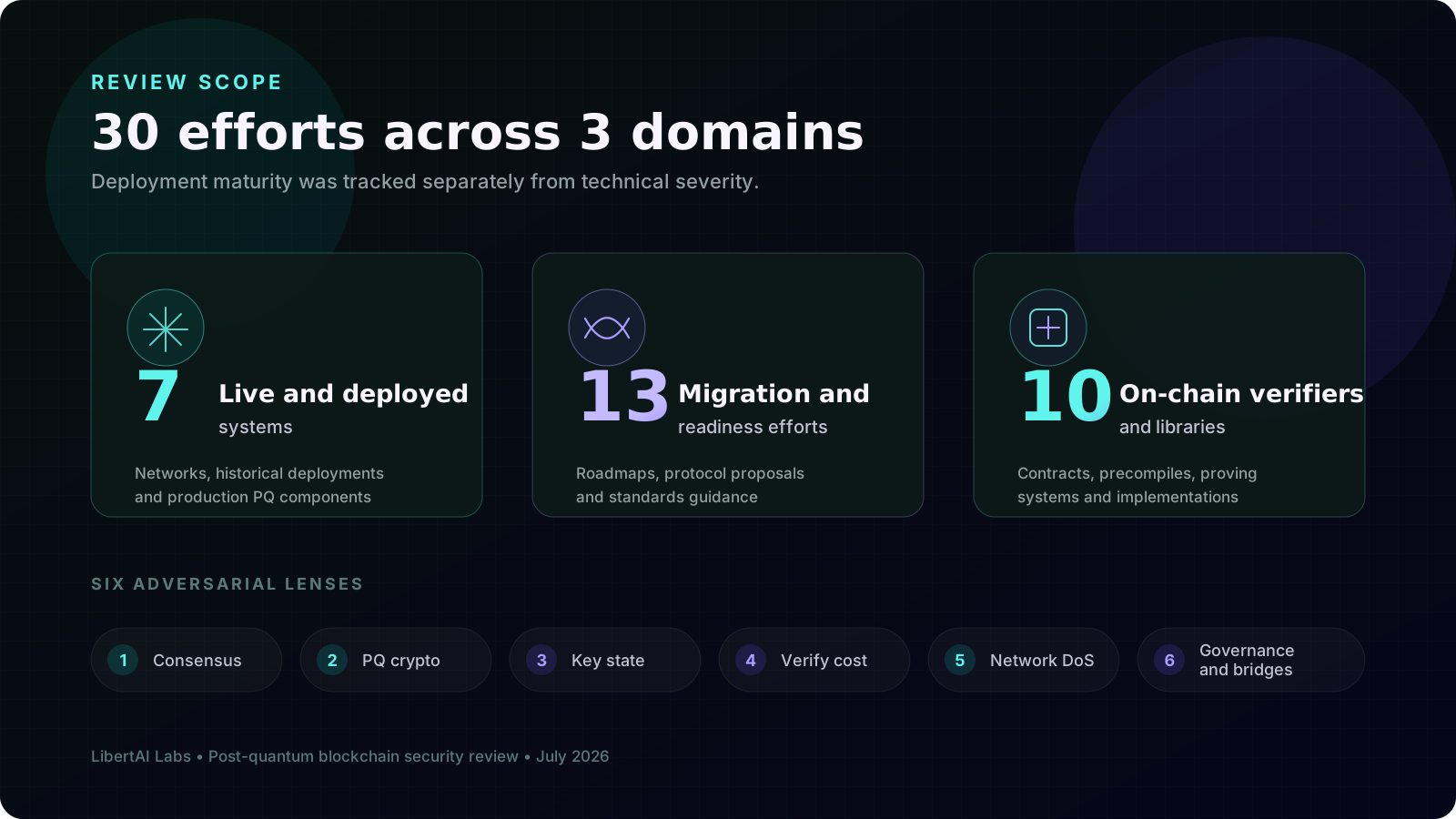
The 30 review targets were grouped into three domains:
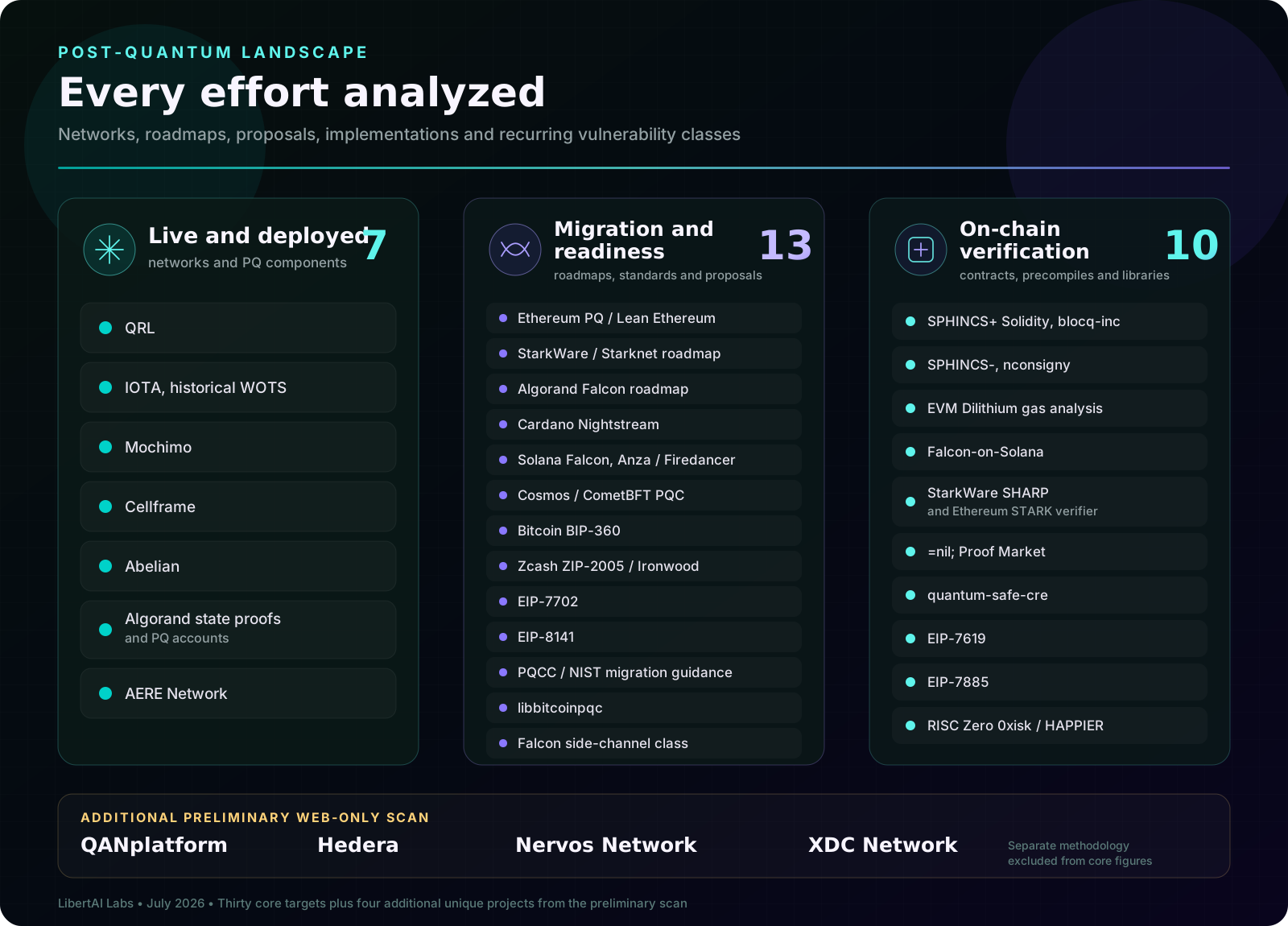
- Live and deployed systems: QRL, historical IOTA WOTS, Mochimo, Cellframe, Abelian, Algorand state proofs and PQ accounts, and AERE Network.
- Migration and readiness efforts: the Ethereum PQ roadmap, the StarkWare/Starknet roadmap, the Algorand Falcon roadmap, Cardano Nightstream, Solana Falcon work in Anza and Firedancer, Cosmos/CometBFT PQC, Bitcoin BIP-360, Zcash ZIP-2005 and Ironwood, EIP-7702, EIP-8141, PQCC and NIST migration guidance, libbitcoinpqc, and the Falcon implementation side-channel class.
- On-chain verification and libraries: SPHINCS+ Solidity by blocq-inc, SPHINCS- by nconsigny, EVM Dilithium gas analysis, Falcon-on-Solana, StarkWare SHARP and the Ethereum STARK verifier, the =nil; Proof Market, quantum-safe-cre, EIP-7619, EIP-7885, and the RISC Zero 0xisk and HAPPIER aggregation work.
A separate preliminary, web-only landscape scan also covered QANplatform, Hedera, Nervos Network and XDC, alongside four projects repeated in the core set. We list those names for completeness but keep their results out of the figures below because that scan did not use the same source-level adversarial workflow.
The word “project” is convenient shorthand here. The scope also includes EIPs, roadmaps, standards guidance, implementation libraries and one cross-cutting implementation class. Deployment maturity was tracked separately because a mainnet protocol, a testnet integration and an unshipped proposal do not carry the same practical risk.
Adversarial verification
Each target was profiled and threat-modeled through six lenses: consensus, post-quantum implementation correctness, key and state management, smart-contract verification cost, network denial of service, and governance, upgrades and bridges. Reviewers then tried to refute every candidate against source code, deployed state and primary references.
Scale of the run
The initial discovery, profiling, threat-modeling and verification stages used approximately 1,850 agent assignments. Subsequent finding triage allocated five independent agent passes to each of the seven critical deep-dives and three passes to each of the 149 high-severity root issues.
| Measure | Review scale |
|---|---|
| Model | GLM-5.2 |
| Initial workflow | approximately 1,850 agent assignments |
| Critical triage | 5 passes per issue, 35 assignments |
| High-severity triage | 3 passes per issue, 447 assignments |
| Approximate total | 2,332 agent assignments |
| Model tokens | 4.4 billion |
An assignment is one bounded agent review pass, not a claim that 2,332 distinct persistent workers ran simultaneously. The scale created breadth and redundancy; the source-level refutation stages provided the quality control.
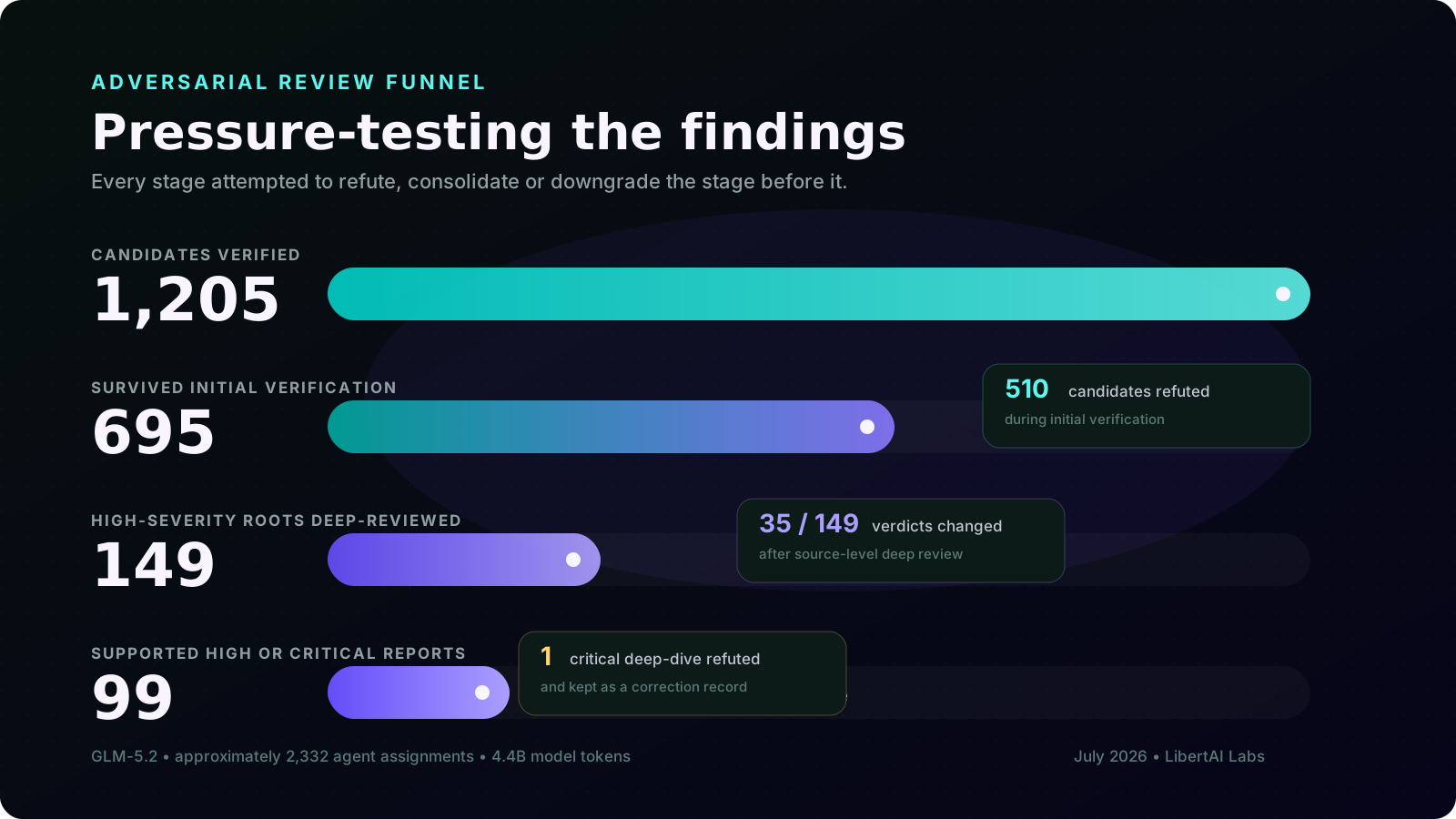
The first pass verified 1,205 candidate findings. Of those, 695 survived and 510 were rejected. We then consolidated repeated descriptions into 149 high-severity root issues and deep-reviewed each one. Source-level rechecking overturned 35 of the 149 initial verdicts. One of seven critical deep-dives was also refuted. The current disclosure set contains 93 supported high-priority reports and six supported critical reports across mainnet, testnet, integration and standards contexts.
Those counts measure the review process, not 99 immediately exploitable mainnet vulnerabilities. Deployment, attacker access, required privileges and value at risk were graded independently, and many technically serious conditions are latent, testnet-only or conditional on future integration.
Where the evidence was encouraging
Three targets had no high or critical candidate survive the first adjudication: QRL, the Cardano Nightstream roadmap and the official Solana migration work in Anza and Firedancer. The Solana result is separate from the experimental Falcon-on-Solana library, which was reviewed as its own target. The meaning also differs by maturity. QRL provided years of live operational evidence and retained medium-level key-management and protocol concerns. Cardano and Solana were assessed primarily as roadmaps or pre-deployment engineering, so the clean high-severity result is promising but cannot substitute for reviewing shipped code.
Starknet and StarkWare were among the strongest positive results. Their transparent, hash-based proving core avoids the classical assumptions that break under Shor’s algorithm, the verifier has substantial production history, and the surrounding stack has a broad audit footprint. The retained concerns clustered around availability, governance and classical boundary components rather than a break in the core proving construction or a straightforward remote-funds path.
Algorand also showed meaningful strengths through deployed post-quantum state-proof infrastructure and practical account agility. It retained higher-priority concerns, so the recognition here is about concrete engineering signals rather than a safety certificate.
Responsible disclosure
We are preparing project-specific reports for maintainers, ordered by deployment reality and realistic attacker capability. Each disclosure separates what is confirmed in source from what is conditional, identifies the smallest useful reproduction, and gives maintainers room to validate and patch before technical details are published.
The accompanying research note explains the broad patterns that emerged and the lessons teams can act on now.